How to Check Whether Your Meta Pixel Is Actually Working
Tracking work can look correct in a dashboard while still producing the wrong commercial answer. Before changing reports or campaign decisions, it is worth understanding what the event should represent, where it is collected and which system is the final source of truth.
The practical aim is to a green status light is not enough. test the events yourself so optimisation is based on accurate product, basket and purchase data. Work through the process in order and keep the commercial source of truth beside you while you test.
A Meta campaign can report purchases even when the Pixel is missing events, firing twice or sending incomplete values. A green status in Events Manager is a starting point, not proof that ecommerce tracking is trustworthy.
Test the full journey yourself, then compare browser events, server events and the orders recorded by the store.
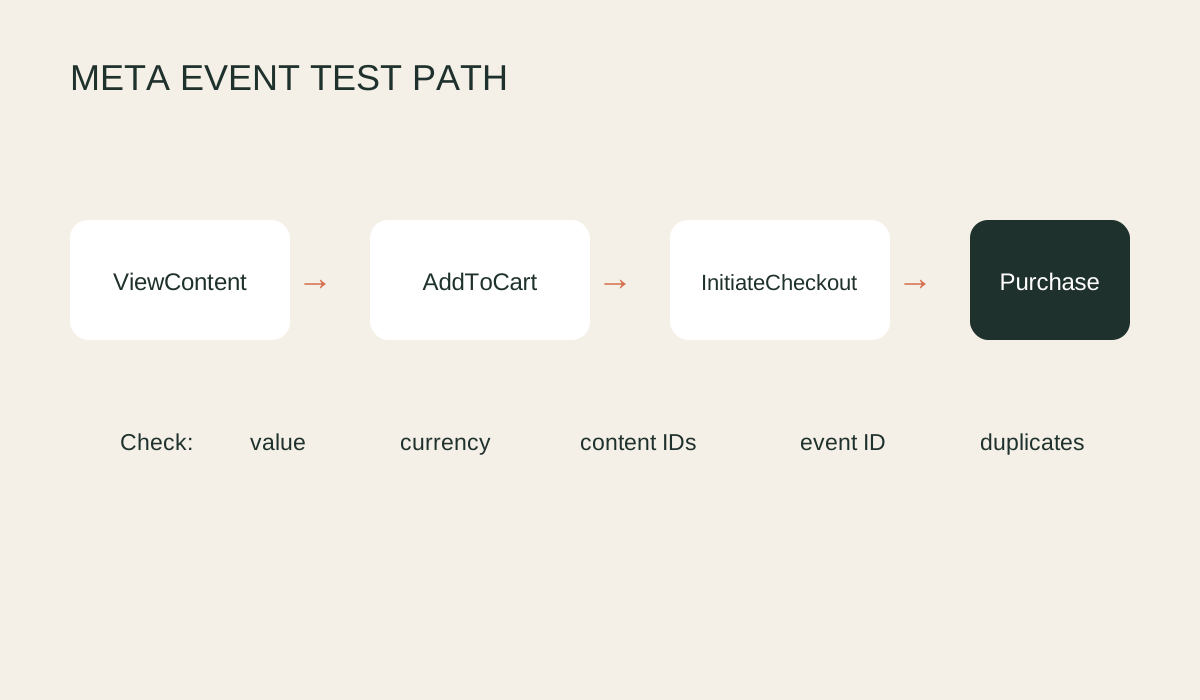
Check the Pixel from browser to purchase
- Confirm the correct data source. In Meta Events Manager, select the Pixel or dataset connected to the store and check that activity has been received recently. Make sure you are not looking at an old Pixel with a similar name.
- Open Test events. Enter the store URL, open the site from the test tool and accept or reject consent as a normal visitor would. Meta should show the test device and incoming events in near real time.
- Complete one clean shopping journey. View a product, add it to basket, begin checkout and place a test order. Watch for PageView, ViewContent, AddToCart, InitiateCheckout and Purchase in the expected order.
- Inspect event parameters. Open each event and check content IDs, product value, currency, item count and the event source URL. Purchase value should equal the order amount according to the store's agreed reporting definition.
- Check for duplicate Purchase events. Refresh the confirmation page and confirm a second browser purchase is not created. If browser and Conversions API both send the event, confirm they share an event ID so Meta can deduplicate them.
- Use Diagnostics. Review current warnings for missing parameters, match quality, deduplication and domain issues. Read the affected event and date rather than clearing warnings without understanding them.
- Test consent behaviour. Repeat the journey after rejecting non-essential tracking. Confirm the implementation follows the consent setup and local requirements rather than forcing events to fire regardless.
Compare against the store
Use a recent seven-day period and compare Meta Purchase events with Shopify online-store orders. They will not match exactly because attribution, consent, browser restrictions, refunds and order sources differ, but a major gap or abrupt change needs investigation.
Also check Event Match Quality and server coverage if Conversions API is installed. These indicators help diagnose the setup, but they do not guarantee accurate attribution. Keep a record of test order numbers, timestamps and event IDs so a developer can trace failures without repeating the entire exercise.
How do you check whether your Meta pixel is actually working?
The best approach is to a green status light is not enough. test the events yourself so optimisation is based on accurate product, basket and purchase data. Confirm what the data should represent, test it at source and compare it with the commercial system before using it to make a decision.
Keep a simple record of what changed, when it changed and the result you expected. That makes the next review more useful and stops a good or bad outcome being explained by guesswork.
What should you do first?
Confirm the correct data source. In Meta Events Manager, select the Pixel or dataset connected to the store and check that activity has been received recently. Make sure you are not looking at an old Pixel with a similar name. This first check gives the rest of the process a clear reference point and helps prevent several variables being changed at once.
How do you know it is working?
A successful result is not simply an event appearing on screen. The event should fire once, contain the expected values and reconcile closely enough with the commercial system to support decisions. Document any known difference instead of quietly changing the reporting source.

Olivia Robinson
After arriving at a fork in the road in my career I decided to take the plunge and wander purposefully, with determination, into the maelstrom of consultancy in online sales. It's been the most exciting decision I've ever made and I've been able to work with some of the most interesting brands the UK has to offer. I specialise in the intersection of ecommerce and marketing, the part of the Venn diagram that eCommerce & Marketing people don't like to occupy because it takes a lot of plate spinning - this is where I thrive.
We will happily conduct a free, no-obligation audit on your digital channels, with several key takeaways you can action yourself or request for us to assist you with. It's completey free for now but it is a limited time offer.
Explore more blogs