Meta Ad Targeting in 2026: How to Use Interest, Behaviour, and Custom Audiences Effectively
Meta advertising has evolved significantly. In 2026, marketers can no longer rely on broad targeting and generic ads. Privacy regulations, AI-driven optimisation, and changing consumer behaviour mean that understanding how to segment audiences effectively is critical for maximising ROI.
In this guide, we break down interest, behaviour, and custom audiences, offering strategies, pitfalls, and actionable tips for marketers running Meta Ads today.

Interest Targeting: Relevance Through Context
Interest targeting remains a foundational approach for reaching potential customers. Meta now combines declared interests, inferred behavior, and engagement signals to group users into dynamic interest clusters. These clusters are constantly evolving, reflecting users’ interactions across Instagram, Facebook, and Messenger, and are optimised by AI to highlight those most likely to respond to a given ad.
Layering interests is key. For example, instead of simply targeting users interested in “fitness,” a campaign might combine that with “plant-based nutrition” or “home workouts.” These micro-segments allow marketers to craft messages that resonate on a deeper level. However, interest targeting alone is rarely sufficient today. It works best as a discovery tool, helping campaigns reach new audiences, while higher-intent targeting layers drive actual conversions.
The key takeaway is that interests are fluid. Audiences shift over time, and AI-driven targeting often outperforms manual selections, so campaigns must be monitored and adjusted regularly to stay relevant.
Behavior Targeting: Understanding How People Act
While interest targeting reflects what people say they like, behavior targeting focuses on what they actually do. In 2026, Meta can use a wide range of signals—from past purchases and app activity to interactions with content across Meta platforms—to identify users most likely to convert.
A behavior-focused campaign might target users who recently engaged with short-form video content in a relevant category, or people who frequently shop online for products similar to yours. This approach allows marketers to reach users at key moments of intent.
For example, a fashion brand could identify individuals who have spent time browsing outerwear content on Instagram and recently engaged with similar products on Facebook. By combining these behavior signals with interest-based segments, brands can reach higher-intent audiences without overspending on broad targeting.
Behavioral targeting also supports predictive strategies. High-value behaviors, such as repeat purchase patterns or high engagement with previous campaigns, can form the basis of lookalike audiences, allowing marketers to expand reach while maintaining relevance.
Custom Audiences: Leveraging First-Party Data
In today’s privacy-first environment, custom audiences are more critical than ever. Meta allows advertisers to upload first-party data—email lists, website visitors, or app users—to reach high-value segments. This type of targeting bypasses some of the limitations imposed by third-party tracking changes while enabling precise retargeting and cross-selling opportunities.
Custom audiences work best when segmented. High-value customers, recent purchasers, lapsed users, or newsletter subscribers all respond differently to ads. Keeping data fresh is essential; outdated lists can reduce performance and engagement. Equally important is compliance: any first-party data collection must be fully consented, respecting GDPR, CCPA, and other regulations.
Engagement custom audiences are particularly effective. Users who have interacted with your content on Meta within the last 30 to 90 days represent a warm, low-cost retargeting opportunity, often converting at higher rates than cold audiences.

Combining Targeting Types for Maximum Impact
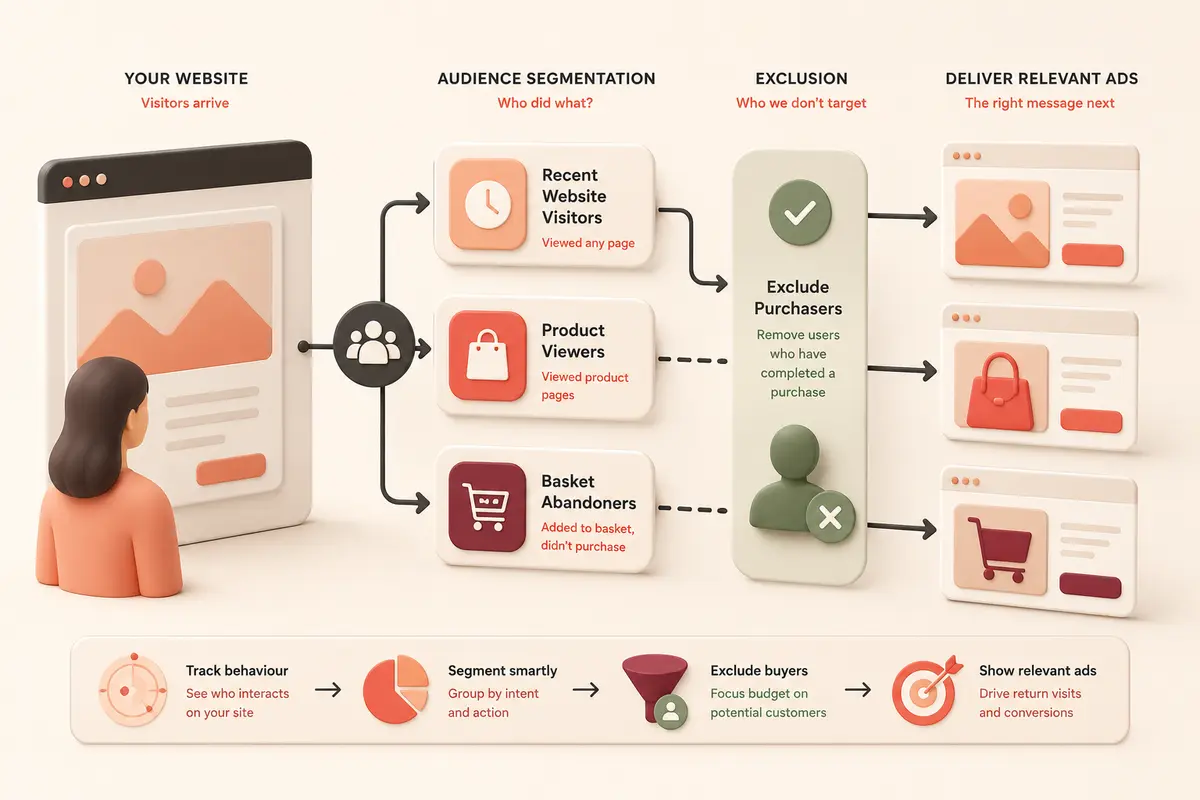
The campaigns that perform best in 2026 rarely rely on a single targeting type. Instead, marketers layer interest, behavior, and custom audiences to create nuanced, high-performing segments.
Take a skincare brand as an example. They might reach users interested in “clean beauty” while also targeting those who visited specific product pages or added items to their cart recently, and finally retarget lapsed subscribers from their email list. This layered approach improves ad relevance, increases engagement, and maximizes conversion potential.
The real power of layered targeting lies in its ability to balance discovery with precision. Interest targeting introduces new audiences, behavioral signals highlight users with intent, and custom audiences ensure that the highest-value segments remain engaged. Together, they create a full-funnel strategy that aligns with both brand and performance goals.
Monitoring, Testing, and Optimisation
Even with sophisticated targeting, success isn’t guaranteed. Campaigns must be continuously monitored and optimised. This includes testing different creatives and messaging within each segment, adjusting bids and budgets dynamically, and measuring beyond clicks. Engagement quality, return on ad spend (ROAS), and conversion metrics provide a far clearer picture of campaign performance than impressions alone.
Audience layers must also be refreshed regularly. Interests evolve, behavior patterns shift, and first-party data changes. Marketers who actively manage these segments can stay ahead of competitors relying on static targeting assumptions.
Conclusion
Meta ad targeting in 2026 is about precision, relevance, and continuous optimisation. Interest, behavior, and custom audiences each offer unique advantages, but the most effective campaigns combine these approaches and leverage AI insights to guide decision-making.
Marketers who embrace layered targeting, first-party data, and dynamic optimisation will see stronger engagement, higher conversions, and more efficient ad spend. In a privacy-conscious, data-driven world, the brands that succeed will be those who balance human insight with AI precision, creating campaigns that resonate with the right people at exactly the right time.

Olivia Robinson
After arriving at a fork in the road in my career I decided to take the plunge and wander purposefully, with determination, into the maelstrom of consultancy in online sales. It's been the most exciting decision I've ever made and I've been able to work with some of the most interesting brands the UK has to offer. I specialise in the intersection of ecommerce and marketing, the part of the Venn diagram that eCommerce & Marketing people don't like to occupy because it takes a lot of plate spinning - this is where I thrive.
We will happily conduct a free, no-obligation audit on your digital channels, with several key takeaways you can action yourself or request for us to assist you with. It's completey free for now but it is a limited time offer.
Explore more blogs