Traffic Is Up. Conversion Is Flat. Stop Buying More Traffic.
When website traffic increases but conversion stays flat or sales fail to move with it, the first response is often to question the quality of the traffic. Paid media is restructured, audiences are changed, budgets move between channels and a large amount of time is spent discussing attribution, even when the website is making it unnecessarily difficult for customers to find and choose the right product once they arrive.
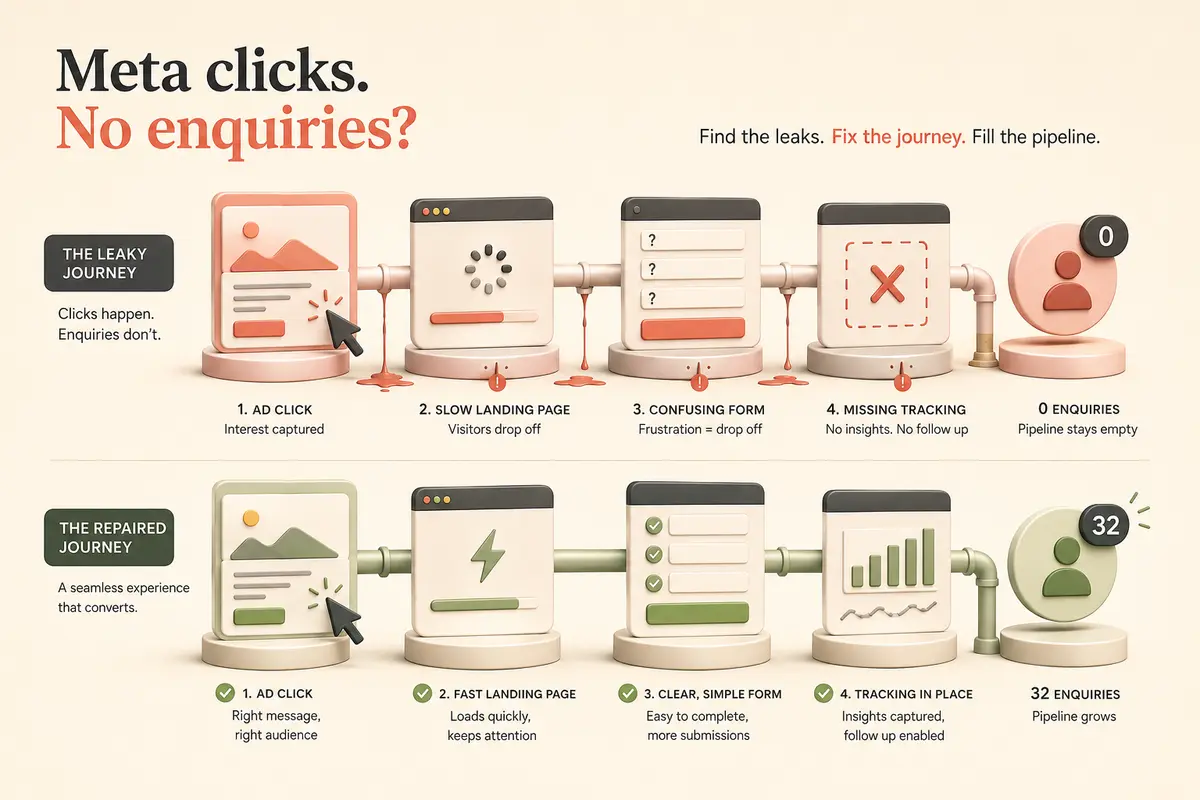
Sometimes the traffic is the problem, but that should be shown in the data rather than treated as the default explanation. If high-intent visitors are landing on relevant pages and still failing to view products, add to basket or complete a purchase, sending more people into the same journey will only make the leak more expensive.
This is where merchandising needs to be taken more seriously. It is not simply the order in which products appear on a collection page, because it also covers navigation, search, filters, product naming, stock visibility, recommendations and the way the catalogue has been organised around how customers actually shop.
Beauty and fashion sites become messy quickly because new products, collections and campaigns are added over time, often by different teams using different logic. Categories start to reflect internal language, filters rely on inconsistent product data, out-of-stock items remain high in collections and recommendation apps serve whatever their default rules produce. None of these issues looks significant on its own, but together they create a journey that asks the customer to do far too much work.
Start with the pages receiving the traffic
I would begin by breaking performance down by landing page, channel, device and new versus returning customer, then identify the high-traffic journeys where customers are not moving into product views or add-to-basket at the rate you would expect. This gives you a much clearer starting point than looking at one blended conversion rate for the entire site.
Site search is usually one of the best sources of information because it shows the language customers use and the products they expected to find. Look at searches with no results, searches that return irrelevant products, terms that customers repeatedly refine and products that exist but cannot be found under their common name. If customers are searching for heat protection while the catalogue only uses internal range names, the site needs to understand the customer rather than expecting the customer to understand the catalogue.
Collections need the same review, particularly on mobile where the first products and available filters do most of the work. The products at the top should be in stock in useful sizes or shades, the cards should make comparison easy and the filters should reflect the decisions customers are trying to make. Beauty customers may want to shop by concern, finish, shade family or routine step, while fashion customers may need size availability, fit, length, colour or occasion. Brand and price filters alone rarely deal with the real choice.
Recommendations are another common weak point because a heading such as You may also like gives no indication of what the products are doing there. Decide whether the module is offering an alternative, completing a routine or suggesting the next product, then label it accordingly and make the logic fit that job. A genuinely relevant complementary product will normally do more than a carousel of general bestsellers, even if the bestseller carousel is easier to automate.
Bring commercial data into merchandising
The highest-converting product is not automatically the right product to push if it has weak margin, limited stock, missing sizes or a high return rate, so I would bring traffic, add-to-basket rate, conversion, stock cover, size or shade availability, contribution margin and returns into the same weekly view. This stops merchandising becoming a visual opinion and prevents the site from directing more demand towards a product the business cannot support properly.
Once the issues are clear, build a backlog and separate the quick fixes from the work that needs a larger change. Adding a missing synonym, pushing an available bestseller higher on mobile, rewriting an unclear product name or fixing a high-volume search with zero results can be done quickly, while rebuilding product data, navigation or recommendation logic may need more planning.
I would prioritise that backlog using commercial impact, strength of evidence and effort, rather than starting with a redesign wish list. The purpose is to remove the specific barriers stopping customers from finding and choosing products, not to make the website look different because performance has slowed.
Before buying more traffic, work out what the traffic you already have is doing, where the journey breaks and whether the catalogue is organised around the customer or around the business. More visitors do not fix weak merchandising, they just expose more people to it.

Olivia Robinson
After arriving at a fork in the road in my career I decided to take the plunge and wander purposefully, with determination, into the maelstrom of consultancy in online sales. It's been the most exciting decision I've ever made and I've been able to work with some of the most interesting brands the UK has to offer. I specialise in the intersection of ecommerce and marketing, the part of the Venn diagram that eCommerce & Marketing people don't like to occupy because it takes a lot of plate spinning - this is where I thrive.
We will happily conduct a free, no-obligation audit on your digital channels, with several key takeaways you can action yourself or request for us to assist you with. It's completey free for now but it is a limited time offer.
Explore more blogs